

An atmosphere of building tension. I can see the cold breath emanating from my rivals as they do the "about to run" wiggle on the starting line.
A swift flick of the hips.
I'm participating in my local Saturday morning race and I mean business. The countdown begins...
Hold on. I must adjust my watch. As does the guy beside me.
The person in the line sighs. I'm not moving until… yes! Signal acquired, away I go.
During the scramble, it's difficult to spot a person without a smartwatch on it. And it's not just us athletes who use them.
It's a booming, multi-billion dollar industry. Companies like Samsung Galaxy lead the market, featuring an wide array of various devices to fit a range of budgets. Based on how advanced the watch you go for, price tags can vary between an affordable sum to a significant investment.
"It drives me insane, I can't stop checking."
"It reassures me… It's like a friend encouraging me."
"I wish it wouldn't say I've had a poor sleep."
Just some of the reactions I've received from fellow smartwatch wearers when I ask what they feel about theirs.
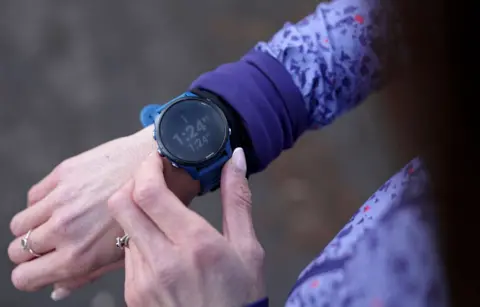
A Sea of Statistics
My feelings on mine? At this moment, irritating. It's reporting my speed is wrong, causing me to question whether the trees I'm passing under are disrupting my location tracking.
Countless individuals of us attach these little devices onto our arms and use them 24/7, apparently unconcerned with the fact they're perpetually recording us.
A distant memory are the days when we depended on them only to give us an rough count of our daily steps. Currently, they can measure our nightly rest, heart rate, oxygen saturation, our VO2 max.
It's difficult to find a physical metric they fail to monitor.
But are they able to do what they say they do? And are the statistics we scrutinise a faithful picture of reality? Do they enhance our daily wellness, or do the multitude of measurements and constant notifications just contribute to our sense of overwhelm?

A Complicated Bond
"I do get a bit obsessed with mine," an individual admits.
While she loves how her device tracks her workouts, she finds some of its other capabilities "excessive" at times - a feeling initially realised during a significant period.
Before she realised she could change its configuration, her smartwatch constantly alerted her she was not being active enough. Now, the watch keeps telling her she's had a poor sleep score.
"I've got a six-month old, I don't need to be told I've not slept," she says. "That fact is all too clearly."
Couldn't she just stop wearing it?
"I suppose I could, I suppose, but I'm in this push-pull dynamic with it," she continues. "I love it for its exercise data, but I'm unsure whether the additional features it can now do is maybe overkill for me."
The Technology Behind the Tracking
Different brands of smartwatch has its own unique way of tracking your health metrics and processing your data, but the majority use detectors on the reverse of the watch.
They commonly project tiny, coloured LED lights onto your arm which can monitor blood flow, recording your BPM. Higher-end devices measure changes in the bioimpedance that runs through the skin to get an idea of your nervous system activity.
Expert Perspectives
One expert says that in general for smartwatches, it's a "fine balance" - while the ever-evolving tech could realistically prevent illness, "spotting abnormalities before we notice anything", it could also turn us watch wearers into the "anxious healthy".
He points out that newer wearables can perform tests like heart rhythm analysis, which regularly monitor how stable the heart is. They can flag if someone is experiencing an irregular rhythm, where there is erratic impulses in the heart causing an irregular heartbeat.
This does not automatically signal someone is imminently going to suffer a cardiac event, but it can give an early warning they might be more at risk of a blood clot in the long term.
But how to interpret these readings is complex. The expert fears that as additional features are added, people may not be able to fully understand their data.
"I have some doubts that being able to monitor so many things is such a positive development," he says.
A clinical psychologist studying wearable tech concurs. Research into the influence of wearable tech on a specific group of individuals with health issues suggested a minority of those who were given devices to monitor their condition experienced greater stress and were "more inclined to use medical services".
She observed a pattern with her patients - they noticed a worrying figure on their watch. They became worried. Their pulse went up. They got even more concerned. They looked a second time, and their anxiety rose further.
"When people are presented with stats about ourselves that we can't properly interpret then, of course, we are going to seek clarification," the psychologist says. "We monitor, we re-check - it becomes a vicious cycle."

